



The Blockchain Solution
The Blockchain Solution
Development of cryptocurrencies is the first, but not the only direction where blockchain technology can be applied. With the help of blockchain technology, human error can be neutralised in various fields and business spheres. Transparency of operations in the blockchain and the inability to change records without characteristic digital traces guarantee the absolute integrity of information transfer when performing any operations.
At Blockchain Solutions, we know how to properly and rationally implement blockchain technology on a section, direction, or at the level of the entire business. It is not mandatory for your business to be involved in the IT sector. Examples of the quality advantages of blockchain technologies in different business areas and government services can be considered, such as:
- Electronic voting on the blockchain
- Document flow
- Cadastre accounting
- Healthcare
- Pharmaceuticals
- Housing and communal services
- Insurance
- Banking
- Logistics

Electronic voting on the blockchain:
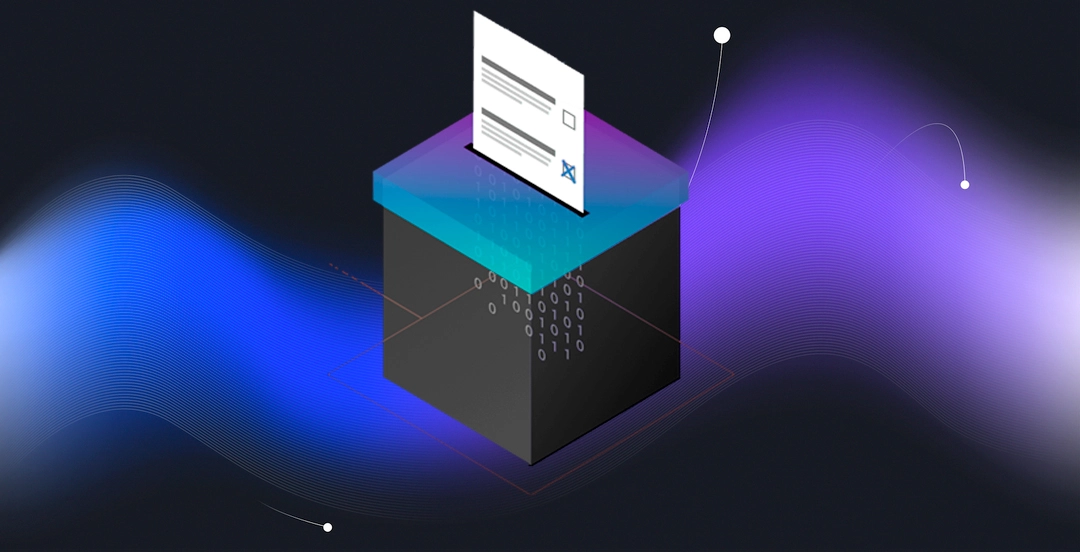
- Fair, transparent, and independent elections on the blockchain
- Conducting both secret and public voting
- Reducing the cost of voting
- Ensuring the preservation of data
Document flow:

- Minimising costs
- Reducing the risk of fraud and errors
- Transparency at every stage of approval and revisions
Cadastre accounting:

- High degree of security and protection
- Significant reduction in processing time for requests
- Increasing attractiveness for business and investments
Healthcare:

- Storage of patient data, medical records, and analyses
- Protection against tampering (falsification) and loss of accumulated data
- Formation of BigData and forecasting the treatment process based on big data
Pharmaceuticals:

- Labeling of factory products in accordance with the presented requirements
- Tracking batches at all stages of production and delivery
- No possibility of falsifying products marked and accounted for in the blockchain
Housing and communal services:

- Monitoring and accounting of energy consumption
- Management of loads and power distribution
- Keeping statistics, requests, and subcontractor control
Insurance:

- Creating a rating
- Automation of calculation based on the data received
- Risk assessment
Banking:

- Online identification
- Full and transparent access for certain parties to the transaction history
- Data structure for conducting fast and painless audits
Logistics:

- Online identification
- Full and transparent access for certain parties to the transaction history
- Data structure for conducting fast and painless audits
Exclusive development of blockchain projects.

Blockchain, Smart Contracts and Cryptocurrency: A New Era of Decentralised Transactions
 Blockchain, Smart Contracts and Cryptocurrency: A New Era of Decentralised Transactions
Smart contracts and cryptocurrency have revolutionised the way people transact and interact with each other. They are a powerful combination that has opened up new opportunities and possibilities in the world of finance and beyond.
Exclusive development of blockchain projects.
Smart Contract
Smart contracts and cryptocurrency have revolutionised the way people transact and interact with each other. They are a powerful combination that has opened up new opportunities and possibilities in the world of finance and beyond.
Cryptocurrency, on the other hand, is a digital or virtual currency that uses cryptography to secure and verify transactions and to control the creation of new units. It is decentralised, meaning that it is not controlled by a central authority, such as a government or financial institution. Instead, it is managed by a network of users who contribute to the system and validate transactions.
The development of cryptocurrency has been ongoing for more than a decade, with Bitcoin being the first and most well-known example. Bitcoin was created in 2009 by an unknown person or group using the pseudonym Satoshi Nakamoto. Since then, hundreds of other cryptocurrencies have been developed, each with its own unique features and characteristics.
Development of coins
The development of coins involves creating a new cryptocurrency from scratch, which typically involves creating a new blockchain network, developing a mining mechanism, and establishing a community of users and investors. Some notable examples of coins include Ethereum, Litecoin, and Dogecoin.
Development of Tokens
Tokens, on the other hand, are created using existing blockchain networks, such as Ethereum, and can be used to represent any asset or utility, such as shares in a company, access to a product or service, or even votes in an election. Tokens can be created through a process called Initial Coin Offering (ICO) or Initial Exchange Offering (IEO), which involves selling the tokens to investors in exchange for other cryptocurrencies or fiat money.
Development of NFTs
Non-fungible tokens (NFTs) are a type of token that represent unique and indivisible assets, such as digital art, music, or collectibles. NFTs have become increasingly popular in recent years, with some selling for millions of dollars.
Development of Stablecoins
Stablecoins are another type of cryptocurrency that are designed to maintain a stable value, typically pegged to a fiat currency or commodity, such as gold or oil. Stablecoins can be useful for traders and investors who want to avoid the volatility of other cryptocurrencies.
Development of DeFi
DeFi, or decentralised finance, refers to a new type of financial system built on blockchain technology that operates without intermediaries such as banks or traditional financial institutions. It aims to offer more transparency, security, and accessibility to financial services to users globally. DeFi applications include lending, borrowing, trading, and investing in various cryptocurrencies and digital assets, all executed via smart contracts on the blockchain. The DeFi movement has grown rapidly in recent years, with billions of dollars' worth of assets locked in DeFi protocols. DeFi is often seen as the future of finance, offering a more decentralised and transparent alternative to traditional finance.
Development of dApps
Decentralised Applications (dApps) are a new class of software applications that run on a distributed computing system, typically a blockchain. Unlike traditional applications that are centrally controlled and operated by a single entity, dApps are designed to be decentralised and provide a transparent, secure, and trustless environment for their users. They offer a range of benefits, including increased transparency, improved security, reduced costs, and greater privacy. dApps have the potential to disrupt various industries, including finance, healthcare, supply chain, and more, by enabling new forms of collaboration and innovation. As the blockchain technology and ecosystem continue to evolve, the adoption and use of dApps are likely to increase.